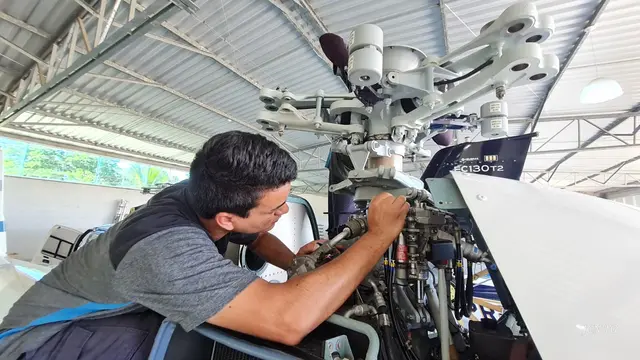



Helicopter maintenance is one of the most critical processes for ensuring flight safety and extending the aircraft’s operational lifespan. As highly complex machines made up of mechanical, hydraulic, electrical, and avionics systems, helicopters require rigorous inspections and well-established maintenance practices.
This guide covers everything operators, owners, mechanics, and parts buyers need to know to keep a helicopter in ideal working condition.
1. Why Helicopter Maintenance Matters
Proper maintenance prevents unexpected failures, reduces long-term costs, and ensures compliance with aviation authorities such as the FAA, EASA, and ANAC.
Key reasons to prioritize maintenance include:
-
Guaranteed flight safety
-
Higher aircraft availability
-
Lower operational downtime
-
Preservation of resale value
-
Reliability for mission-critical operations
2. Types of Helicopter Maintenance
Maintenance tasks generally fall into three main categories:
Preventive Maintenance
Performed at specific intervals (50h, 100h, 500h, etc.) to anticipate failures. Includes inspections, lubrication, adjustments, and component replacements.
Corrective Maintenance
Performed when a defect or unexpected wear is detected. May involve repairs, part replacements, or complete overhauls.
Scheduled Maintenance
Includes mandatory deep inspections such as overhauls of engines, transmissions, and rotor systems. These follow strict manufacturer guidelines.
3. Systems That Require Constant Attention
A helicopter’s structure includes highly sensitive components across several systems:
-
Airframe & Structural — fuselage, supports, accessories, structural kits
-
Powerplant & Transmissions — engines, engine accessories, gearboxes
-
Avionics & Electrical Power — navigation, communication, displays, wiring
-
Mechanical & Hydraulic Systems — flight controls, hydraulics, actuators
-
Ground Support Equipment (GSE) — tools and support equipment
Each system has its own inspection intervals and replacement criteria.
4. Best Practices for Operators and Mechanics
To maintain peak performance and safety:
-
Keep detailed and accurate logbooks
-
Use original or certified replacement parts (OEM or PMA)
-
Work with authorized maintenance facilities and engineers
-
Monitor performance trends such as vibration and temperature
-
Establish consistent pre-flight and post-flight inspections
Maintenance is not just a technical process — it is a mindset rooted in discipline and responsibility.
🔧 Need certified helicopter parts for your next maintenance cycle?
Visit the Flyriun Marketplace and find trusted components for multiple aircraft models.
➡️ flyriun.com